
Introdction
Moving to Dubai is exciting, but relocating a dog or cat requires more preparation than booking a flight. The UAE has specific veterinary and import requirements designed to protect animal health and control the spread of diseases. If you are planning dog or cat relocation to Dubai, understanding these requirements before your pet travels can prevent delays, extra costs, or problems at the airport.
The process generally involves obtaining a UAE pet import permit, ensuring your pet has a permanent microchip, keeping vaccinations current, arranging the required veterinary health certificate, and following airline and animal-transport rules. Pets arriving in the UAE are also inspected at the entry point before they can be released. The current Ministry service states that an import permit is valid for 90 days from its date of issue.
This guide explains the process in practical terms so you can plan your dog or cat relocation to Dubai with fewer surprises.
What Is Required for Dog or Cat Relocation to Dubai?
The UAE requires a prior import permit before cats or dogs enter the country. The animal must also be permanently identified with a microchip, and the microchip number recorded on the health certificate must match the chip implanted in the pet.
Your pet must travel according to applicable IATA animal-transport requirements. At arrival, the authorities verify the animal and its documentation before issuing the electronic release permit.
For most owners, the important point is that the relocation process starts well before the flight. Vaccinations, rabies requirements, laboratory testing where applicable, health certification, airline arrangements, and the UAE import permit all need to fit together.

How to Get a UAE Pet Import Permit for Dubai
The first formal step in dog or cat relocation to Dubai is applying for the UAE pet import permit through the Ministry’s digital service.
The current Ministry service describes the process as an electronic application followed by electronic payment and issuance of the permit. The service currently lists a processing time of about one working day for ordinary pet imports, while applications involving service, emotional-support, or medical dogs can take longer.
The permit is currently valid for 90 days from the date it is issued. This gives owners a reasonable window in which to organize the actual journey, but it is still important to coordinate the permit with your airline booking and veterinary appointments.
Do not assume that obtaining the permit alone means your pet is ready to fly. The permit is only one part of the relocation process. Your animal must still meet the health, identification, documentation, and transport requirements at the time of arrival.
Microchip Requirements for Dogs and Cats
A permanent microchip is an essential part of dog or cat relocation to Dubai.
The UAE requires imported cats and dogs to have permanent identification through a microchip. The number on the microchip must correspond with the number written in the animal’s health documentation.
This sounds simple, but mismatched paperwork is one of the easiest things to overlook. Before traveling, ask your veterinarian to scan the microchip and compare the number with the vaccination record, pet passport, health certificate, and other documents.
If your pet has an old microchip, make sure it can be read properly. Keep the exact identification number consistent across every document.
Vaccinations Needed for Dog or Cat Relocation to Dubai
Vaccination requirements differ between dogs and cats, but rabies vaccination is particularly important.
For dogs, UAE requirements include rabies vaccination as well as protection against canine distemper, canine parvovirus, infectious canine hepatitis, and leptospirosis. The Ministry states that leptospirosis vaccination may be replaced by testing where the exporting country does not provide that vaccination.
For cats, the required vaccinations include rabies, feline panleukopenia, feline rhinotracheitis, and feline calicivirus. The rabies vaccination must follow the manufacturer’s instructions, and the animal cannot receive its initial rabies vaccination before 12 weeks of age.
Your pet’s vaccination document or passport should contain important identification and vaccine details, including the microchip number, animal description, vaccine information, manufacturer, batch number, and vaccination date.
Because vaccine validity can depend on the product and timing, it is better to have your veterinarian review the complete record rather than relying only on the date of the last injection.
Does Your Pet Need a Rabies Antibody Test?
This depends on the risk classification of the country from which your pet is being imported.
For animals arriving from high-risk countries, the UAE requires a rabies antibody titration test performed by an approved laboratory. The required result is at least 0.5 IU/ml. The Ministry’s rules also specify timing requirements after vaccination. If the animal is receiving its first rabies vaccination or has an interrupted vaccination history, at least 21 days must pass after vaccination before the relevant testing process. A valid booster vaccination can change this timing requirement.
For animals from low-risk countries, the additional antibody titration requirement does not apply in the same way. Because country classifications can change, owners should verify their country’s current status before making veterinary arrangements.
This is especially important for international moves from countries where rabies testing laboratories, sample shipment, or government veterinary certification may take several weeks.
How Old Must a Pet Be to Enter Dubai?
Age is another important part of dog or cat relocation to Dubai.
The UAE regulations state that animals should not be younger than 12 weeks when vaccinated. Animals imported from low-risk countries must generally be at least 12 weeks old, while animals coming from high-risk countries must generally be at least 15 weeks old.
This means very young puppies and kittens may not be eligible to travel immediately, even if they have started receiving vaccinations.
If you are relocating with a young pet, work backward from your intended travel date. Your veterinarian can help determine when the animal will meet the vaccination and age requirements.
Veterinary Health Certificate for Dubai Pet Import
A veterinary health certificate is another central document for dog or cat relocation to Dubai.
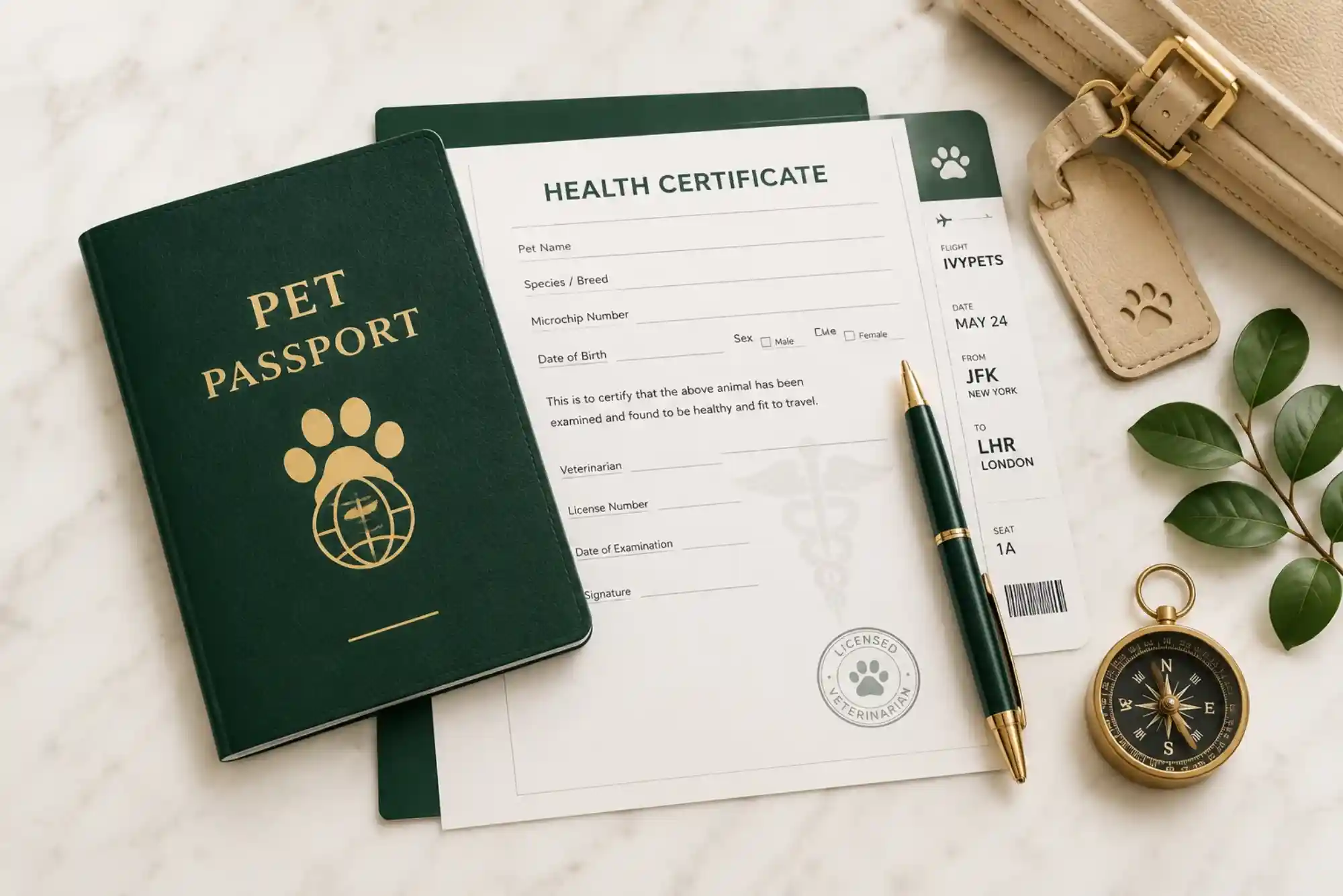
The UAE requires an attested veterinary health certificate issued by the competent veterinary authorities in the exporting country. It should confirm that the animal has been examined and does not show signs of disease.
The exact certification process can vary depending on your country of departure. Some countries require a private veterinarian to complete the examination first, followed by government veterinary endorsement.
Do not leave this document until the last minute. Health certificates often have specific validity periods, and the timing needs to match your flight and UAE entry requirements.
Parasite Treatment Before Your Pet Travels
The UAE also requires imported cats and dogs to receive preventive treatment for internal and external parasites during the 14 days before shipment.
The treatment must be recorded in the health certificate or the animal’s passport.
Your veterinarian should therefore record the treatment clearly rather than simply telling you that it was administered. Dates and supporting documentation matter during international pet travel.
A useful approach is to schedule the parasite treatment as part of the final veterinary preparation rather than treating it as a separate task.
Airline Rules for Relocating Pets to Dubai
Getting the UAE paperwork right does not automatically guarantee that your pet can travel on your preferred flight.
The UAE requires cats and dogs to be transported according to IATA requirements for animal transportation.
Airlines can also have their own rules concerning crate dimensions, breed restrictions, seasonal temperature limits, health documentation, routing, and whether an animal can travel in the cabin or must travel as cargo.
For that reason, contact the airline before purchasing a non-refundable ticket. Give them your pet’s breed, approximate weight, crate dimensions, departure country, destination airport, and travel date.
Your pet’s travel crate should also be introduced well before the flight. A dog or cat that is already comfortable spending time in its crate is usually easier to manage during a long journey.
Are Certain Dog Breeds Restricted in the UAE?
Breed restrictions are particularly important when planning dog relocation to Dubai.
UAE regulations prohibit the import of several categories and breeds of dogs, subject to specific exceptions for service, emotional-support, or medical purposes. The current official dangerous-dog list includes Staffordshire Bull Terrier, American Pit Bull Terrier, American Staffordshire Terrier, American Bully, several Mastiff breeds, Japanese Tosa, and Presa Canario.
The exceptions are not automatic. Dogs being imported for service, emotional-support, or medical purposes have additional documentation requirements, including certified training documentation and, where applicable, medical supporting documentation.
If your dog is a restricted breed or has mixed ancestry that may create uncertainty, verify eligibility with the relevant UAE authority before paying for transportation.
How Much Does It Cost to Relocate a Pet to Dubai?
The total cost of dog or cat relocation to Dubai depends on the country of departure, airline, pet size, crate, veterinary services, laboratory testing, document certification, and whether you use a professional relocation company.
The current Ministry service lists a federal import-permit fee of AED 200 per animal. At arrival, the listed release fee is AED 500 for a dog and AED 250 for a cat.
These government charges are only part of the total cost. You may also need to pay for vaccinations, microchipping, laboratory testing, veterinary certification, government endorsements in the exporting country, an airline-approved crate, airline transportation, and customs or handling services.
For that reason, it is better to calculate the entire relocation budget instead of looking only at the UAE import-permit fee.
What Happens When Your Pet Arrives in Dubai?
After arrival, the pet must go through the required inspection and release process at an approved entry point.
The Ministry’s current service describes the release process as an electronic application, payment, and visual inspection, followed by electronic issuance of the release permit. Dubai Airport Cargo Village is one of the listed veterinary quarantine service channels.
Your documents should be readily accessible because airport staff and veterinary authorities may need to verify the animal’s identification and health information.
If the animal does not meet the applicable import requirements, the consequences can be serious. UAE regulations provide for measures including returning the animal to the country of origin at the importer’s expense or confiscation in cases where requirements are not met.
That is why checking everything before departure is much safer than trying to correct paperwork after arrival.
How Many Pets Can You Import Personally?
The UAE allows personal importation of no more than two cats, two dogs, or one cat and one dog per year, with an exception for resident animals leaving and returning to the country when the applicable conditions are satisfied.
If you are moving with several animals, this rule is important to investigate before booking transportation. Commercial or licensed animal facilities may operate under different requirements from individual pet owners.
What About a Pet Returning to the UAE?
A UAE resident’s pet returning after traveling abroad still needs an import permit.
The rules require the returning animal to have been microchipped, accompanied by an authorized veterinary certificate from the exporting country, and vaccinated against rabies before leaving the UAE with the vaccination remaining valid until return. If the rabies vaccination expires before the animal comes back, it may be treated as a first-time import.
If you expect to travel back and forth between Dubai and another country, discuss the return journey with your veterinarian before leaving the UAE.
Common Mistakes to Avoid During Pet Relocation
One common mistake is booking the flight before checking whether the pet meets UAE entry requirements. The airline ticket should come after you understand the vaccination timeline, microchip status, health certificate process, and import permit requirements.
Another mistake is assuming that a vaccination card alone is sufficient. UAE requirements include detailed animal identification and vaccination information, while high-risk-country imports may require additional rabies antibody testing.
Owners also sometimes forget that airline rules and UAE government rules are separate. A pet can satisfy one set of requirements and still be refused transportation by an airline because of its breed, crate, routing, or travel conditions.
Finally, avoid relying on old online guides for fees or permit validity. Official requirements can change. For example, the current Ministry service lists a 90-day import-permit validity and current government fees that differ from some older documents available online.
Plan Your Pet’s Dubai Move Early
Successful dog or cat relocation to Dubai is mostly about timing and accurate documentation. Start by checking your pet’s breed eligibility and country risk classification. Then confirm the microchip, vaccinations, rabies requirements, parasite treatment, health certificate, airline rules, and UAE import permit.
The current UAE Ministry process is largely electronic, but that does not mean pet relocation can be arranged at the last minute. Veterinary preparation and laboratory testing, especially for high-risk countries, can take considerably longer than the permit application itself.
FAQs
Can I bring my dog to Dubai?
Yes, dogs can be imported into the UAE when they meet the applicable import, health, identification, vaccination, and transport requirements. However, certain dog breeds are prohibited or subject to specific rules, so breed eligibility should be checked before arranging travel.
Can I bring my cat to Dubai?
Yes. Cats can be imported into the UAE with the required import permit, microchip, vaccinations, health documentation, parasite treatment, and transport arrangements. The animal is inspected at the UAE entry point before release.
How much does it cost to import a dog to the UAE?
The current Ministry service lists AED 200 for the import permit per animal and AED 500 for the release of one dog. A cat’s listed release fee is AED 250. These government fees do not include airline, veterinary, laboratory, crate, or other relocation expenses.
How long does a UAE pet import permit take?
The current Ministry service estimates about one working day to obtain an ordinary pet import permit. Applications involving service, emotional-support, or medical dogs may take up to five working days according to the service information.
Does my dog need a rabies titre test to enter Dubai?
A rabies antibody titration test is required for animals imported from high-risk countries under the applicable UAE rules. The test result must meet the specified minimum of 0.5 IU/ml. Requirements differ according to the exporting country’s risk classification.
How old does a puppy or kitten have to be to enter the UAE?
Animals from low-risk countries generally must be at least 12 weeks old, while animals from high-risk countries generally must be at least 15 weeks old. Rabies vaccination also cannot begin before the animal reaches 12 weeks of age.
Do pets need a microchip to enter Dubai?
Yes. Imported dogs and cats must have permanent identification through a microchip, and the number recorded in the health certificate must match the animal’s microchip.
Is quarantine required for every pet entering Dubai?
The current Ministry pet-import service describes inspection and release procedures at the entry point. It does not state a blanket mandatory quarantine period for every ordinary personal cat or dog import. Additional measures can depend on the animal, origin, health status, and applicable requirements, so owners should verify their specific case before travel.