Introduction
Electrical systems are among the most important components of modern buildings and businesses. Offices, factories, warehouses, hotels, retail stores, and commercial properties all depend on reliable electrical infrastructure for lighting, equipment, communication systems, air conditioning, and daily operations.
Because electrical systems are continuously used, regular inspection and maintenance are essential. Small electrical problems can develop into serious faults when they are ignored, potentially causing equipment damage, operational disruption, or safety concerns.
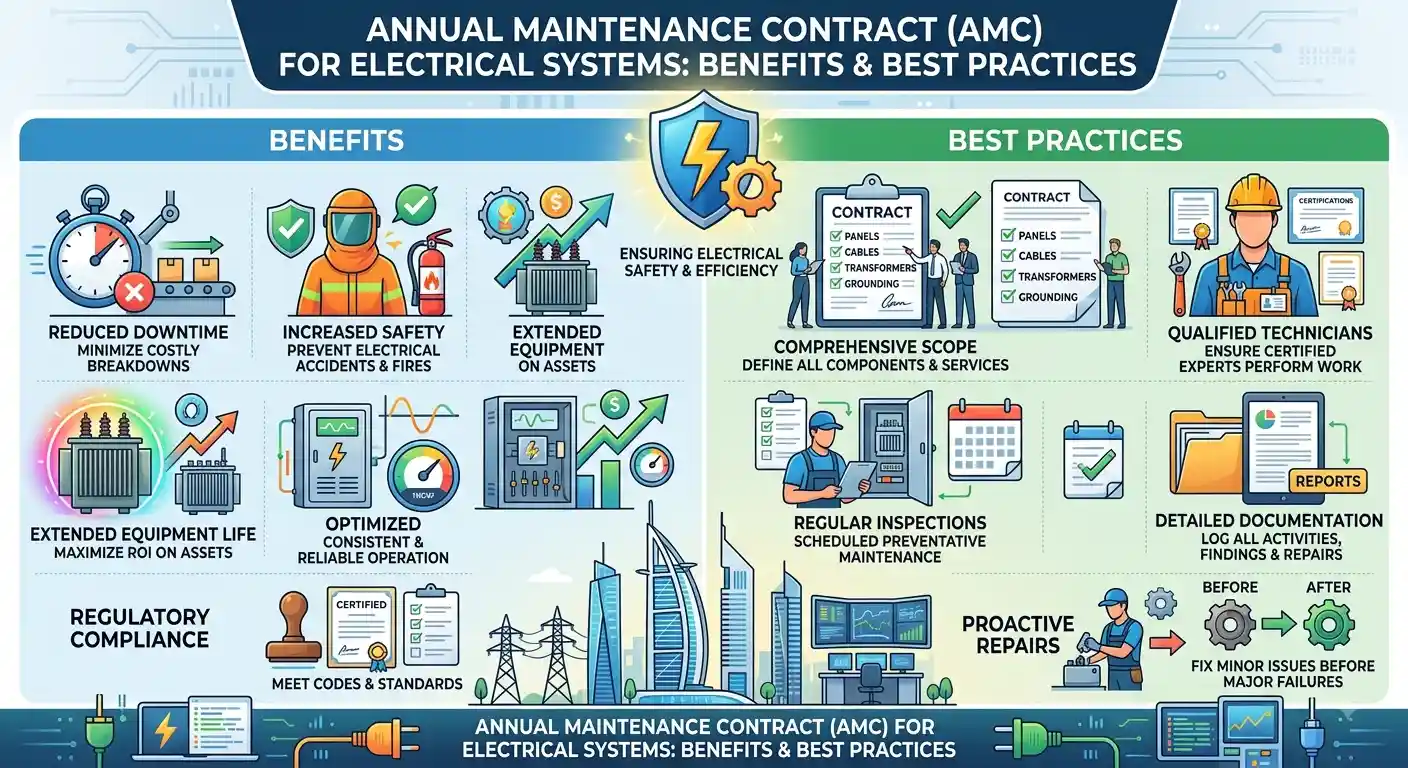
An Annual Maintenance Contract (AMC) provides businesses with a structured way to manage electrical maintenance throughout the year. Through scheduled inspections, preventive servicing, testing, and professional technical support, businesses can take a proactive approach to maintaining their electrical systems.
What Is an Electrical Annual Maintenance Contract?
An electrical annual maintenance contract is a service agreement between a business or property owner and a professional electrical maintenance provider.
The agreement generally remains active for twelve months and defines the electrical systems, equipment, and services covered.
Depending on the contract, maintenance may include electrical inspections, testing, preventive servicing, troubleshooting, minor repairs, and emergency support.

The exact scope varies according to the property, electrical infrastructure, and requirements of the customer.
Why Electrical Maintenance Is Important
Electrical systems can experience wear, loose connections, damaged components, overheating, voltage-related problems, and other issues over time.
Some electrical faults may not be immediately visible. Without professional inspection, these problems can remain unnoticed until they cause equipment failure or disruption.
Regular maintenance allows technicians to identify potential issues earlier and address them before they become more serious.
Regular Electrical Inspections
Routine inspections are a key part of preventive electrical maintenance.
Technicians can examine electrical panels, connections, switches, wiring, circuits, and other relevant components based on the system requirements.
The purpose is to identify signs of overheating, damage, wear, loose connections, or unusual operation.
Regular inspections can support more reliable electrical performance and help reduce avoidable faults.
Prevent Electrical System Failures
Unexpected electrical failures can interrupt business operations.
A power-related issue can affect computers, lighting, HVAC systems, machinery, security systems, and other essential equipment.
An AMC provides scheduled maintenance that helps identify potential problems before they cause major disruptions.
While maintenance cannot eliminate every electrical failure, regular inspection can reduce risks associated with neglected systems.
Improve Electrical Safety
Electrical maintenance is closely connected to workplace and building safety.
Damaged wiring, overloaded circuits, faulty components, and overheating can create potential hazards.
Professional maintenance allows qualified technicians to identify conditions that require attention.
Businesses should ensure that electrical maintenance is performed by appropriately qualified professionals and according to applicable requirements.
Reduce Equipment Damage
Electrical problems can affect connected equipment.
Voltage irregularities, faulty connections, short circuits, and other issues may cause equipment to malfunction or become damaged.
Regular inspection can help identify electrical conditions that may affect sensitive equipment.
Maintaining the electrical infrastructure can therefore contribute to better protection of connected business assets.
Minimize Business Downtime
Electrical failures can bring business activities to a temporary stop.
Employees may be unable to work, production systems may stop, and customers may be affected.
Preventive electrical maintenance helps reduce the likelihood of unexpected faults by addressing developing problems during scheduled inspections.
An AMC can also provide an established process for requesting technical support when an electrical issue occurs.
Support Reliable Power Distribution
Commercial properties often contain complex electrical distribution systems.
Panels, circuits, switches, breakers, cables, and other components must work together to distribute electricity effectively.
Regular maintenance helps technicians monitor these components and identify potential problems.
A structured maintenance schedule can support more consistent power distribution throughout the property.
Maintenance of Electrical Panels
Electrical panels are an important part of a building’s power distribution system.
Regular inspection can help identify loose connections, signs of overheating, damaged components, and other conditions that may affect performance.
The exact maintenance procedures should be determined by qualified professionals based on the equipment and applicable safety requirements.
Generator and Backup Power Maintenance
Many businesses use generators or backup power systems to maintain essential operations during electrical interruptions.
These systems require regular inspection and testing to remain ready for use.
An electrical AMC may include maintenance of generators and related components, depending on the contract.
Businesses should confirm exactly what backup power services are included before signing the agreement.
Lighting System Maintenance
Lighting is another important part of commercial electrical infrastructure.
Faulty lights, damaged switches, wiring problems, and other issues can affect workplace visibility and customer experience.
Regular inspection and timely replacement of faulty components can help maintain reliable lighting throughout the property.
Electrical Testing and Monitoring
Electrical testing can provide useful information about system condition.
Qualified technicians may perform appropriate tests based on the type of electrical installation and equipment involved.
Testing can help identify abnormal conditions that may not be obvious during a visual inspection.
Businesses should ensure that testing procedures are appropriate for their systems and performed by qualified professionals.
Emergency Electrical Support
Even with regular preventive maintenance, electrical problems can occasionally occur.
Businesses should determine whether their AMC includes emergency electrical support.
The agreement should explain response times, availability, and any additional costs associated with emergency visits.
For businesses that operate outside standard working hours, after-hours support may be an important consideration.
Choosing the Right Electrical Maintenance Provider
The quality of electrical maintenance depends heavily on the expertise of the service provider.
Businesses should evaluate the provider’s qualifications, experience, technical capabilities, availability, response times, and reputation.
The company should have experience working with electrical systems similar to those installed at the property.
Safety should be a priority when selecting any electrical maintenance provider.
What Should an Electrical AMC Include?
A suitable contract should clearly identify the electrical systems covered and describe the maintenance services provided.
Important details can include inspection frequency, preventive maintenance procedures, testing, troubleshooting, emergency support, response times, reporting, exclusions, and additional charges.
Businesses should also understand whether replacement parts and major repairs are included.
Maintenance Reports and Documentation
Maintenance records can help businesses monitor electrical system condition.
A professional provider may document inspection dates, identified faults, completed work, testing results, and recommendations.
These records can help facility managers identify recurring issues and plan future maintenance.
Proper documentation can also make it easier to evaluate the provider’s performance throughout the contract period.
How to Get the Most From an Electrical AMC
Businesses should report electrical problems as soon as they are noticed.
Warning signs such as unusual smells, flickering lights, repeated circuit trips, overheating, unusual sounds, or equipment malfunctions should not be ignored.
Early reporting allows qualified professionals to investigate potential problems before they become more serious.
Businesses should also maintain clear records and ensure technicians have appropriate access to electrical equipment.
Final Thoughts
Reliable electrical systems are essential for modern business operations. Regular inspection and preventive maintenance can help reduce electrical faults, support safety, protect connected equipment, and minimize unexpected downtime.
An Annual Maintenance Contract provides a structured approach to electrical maintenance by combining scheduled inspections, preventive servicing, testing, technical support, and maintenance documentation.
Before signing an agreement, businesses should carefully review the services included, emergency response, exclusions, additional charges, and qualifications of the provider.
With the right maintenance partner and a clearly defined contract, businesses can maintain their electrical systems more reliably and support safer, more efficient operations throughout the year.
Related Reading: Xerjoff V Laylati EDP 100ml — full guide
Related Reading: Oven Produces Electrical Burning Smell — full guide
Related Reading: تحليل سعر البيتكوين وتوقعات السوق 2025
Related Reading: استمتع بأناقة وأداء HUAWEI WATCH FIT 5 Pro المتكامل